Farming and Feeding

This, on “Talk of the Nation,” driving up to work this afternoon:

We’ve got to produce as much food by 2050 as we have in the last 8,000 years in order to feed our planet’s population.

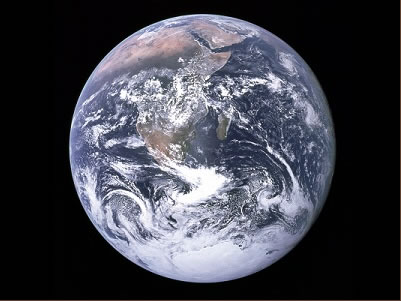
Earth seen from Apollo 17 on December 7, 1972. Credit: NASA

I’d cite the source — the gentleman’s name and credentials — but interstates and tight traffic and note taking do not a good mix make. The fact fixed, though, and sticks with me…

We’ve got some planning and farming and feeding to do.

Posted in Uncategorized | 2 Comments

The Process Leading to a Fine Benediction

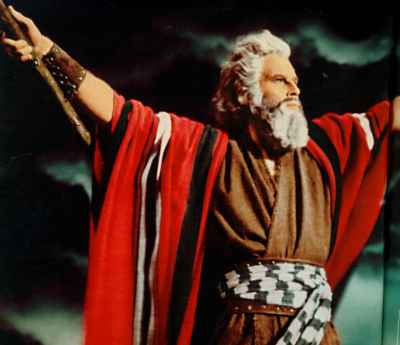
Moses: In some faith traditions, he's believed to be the author of the Torah (the first five books of the Bible), including Numbers, mentioned in the text.

Students in each of my writing classes keep a blog for the semester, and my practice beginning this semester is to join them. (I’ve used a blog in the past to communicate with students but only last year began asking students to do the same.)

Before, I never modeled what I want students to do: compose something, not just anything, but something meaningful once a week, either an original composition or a link to something with brief (or not) personal commentary about the connection.

I’m so pleased with their work, and I hope that they are, too. They deserve to be.

We talk about how writing material percolates, composts, simmers, slow-roasts (insert your preferred verb) — often for long periods of time before the writer is ready to begin shaping the idea(s). They use their daybooks (a less double-X-chromosome-threatening term for “journal”) to get ideas down quickly, and then come back, add more, and so forward. (For my students: I’ve forgotten to share that I use the “drafts” feature in WordPress to build upon ideas that are percolating. Right now, I have 7 drafts in various stages of necessary, messy incoherence.)

William Sloane Coffin

Each week, I get an understandable question: “What do I blog about?”

I cannot tell writers what to compose; that would deny them the essential, uncomfortable, and liberating period of uncertainty we pass through. The best I can do, now, is model a post that is not “original:”

H. Stephen Shoemaker

My friend — author and liberal pastor-theologian Steve Shoemaker — adapted a benediction from William Sloane Coffin, the late author and liberal pastor-theologian. Steve asked Coffin for permission to make some changes, and last week, I asked Steve for his permission to make a (small) change.

Both men’s benedictions build upon the “Priestly Blessing,” a verse found in the Old Testament, specifically in Numbers. (I’m fairly sure neither Dr. Coffin nor Dr. Shoemaker asked permission of the original scribe(s) — maybe Moses? — but I haven’t asked.) You’ll know some of the language, perhaps: the Priestly Blessing infuses the first stanza, and is recited in many faith traditions (Judaic, Christian and more), plus it’s been popularized in films, books, television shows and onward.

I offer this because, well…because I like it:

Benediction

May the Great Spirit bless you
and keep you.
May the Great Spirit’s face
shine upon you and
be gracious unto you.

May the Great Spirit give you the grace
never to sell yourself short;
grace to risk something big
for something good;
grace to remember that the
world is too dangerous
for anything but truth and
too small for anything but love.

So, may the Great Spirit take your minds
and think through them;
may the Great Spirit take your lips
and speak through them;
may the Great Spirit take your hearts
and set them on fire.

William Sloane Coffin
Adapted by H. Stephen Shoemaker
Adapted, ever so minutely, by Malcolm Campbell

Posted in Philosophical, Spiritual, Teaching, Writing | Leave a comment

The Sun Also Rises

We rise at 4:30 and move with few words through our individual departure routines. For me: a shower (I never look so lovely as my wife in the morning), a cup of coffee, a quick breakfast. We meet at the door, carry-on backpacks zipped; confirm that we have photo ID’s and pre-printed boarding passes; then lock the house to join our duffel bags tossed into the car the night before.

It is dark, driving to the airport. Early, early morning has such promise, and all the more so when you’re departing for another place. I love it as much in the middle of my life as I did in my early 20s. Perhaps more so.

At the airport, Lauren waits with the bags while I maneuver back into traffic for weekly parking. Gray light now suffuses the scenery, giving shape to the cars and concrete structures not lit by towering, scatter-shot street lights. I find a parking space between two cars, an SUV and an SUV. It’s a tight fit. Aren’t all the choice parking spaces at airports? Takes me three back-and-forths to angle in, and I’m sad that I no longer possess the grace of a young driver, one who could nail the space’s angle in an even, one-handed turn.

Even at this hour, the air heaves with humid, late-summer heat. Sweat dampens my back and shirt where my carry-on backpack rests. I trudge toward the shuttle stop, eyes down, when reddish-orange light begins to enliven the gray. I stop, look east toward the source. The sun rises as a slit above the distant treeline. It climbs fast enough that I have time to watch its ascent until the star inflates to a full circle, huge on the horizon.

“Damn.” As in, “Well, I’ll be.” As in, “This is the center of our galaxy rising and I don’t see this often.”

=====

I remember a morning in San Sebastian, Spain, in July, 1989.

I was 22 and backpacking through Europe with money I’d saved working through college. This morning, I would board a train, make some connections, and meet two friends — Chuck and Katharine — in Paris. We did not form a complicated triangle; we were a platonic trio, ideal traveling companions.

I awoke early, gulped a cafe au lait and wrapped two bread rolls in a paper bag and thanked my hostess and walked into the dawn streets of the city’s historic district for the train station. I arrived early and sat on a bench. I smoked then and lit a cigarette and the smoke did not move in the air. I also remember thoughts of going somewhere else. No harm would be done. (We made plans in Madrid a week before to rendezvous at three outside a Paris train station. We would wait one hour. No shows meant plans had changed.)

But I felt like company. I broke bread, found water and boarded the train. I could stay in Paris for a couple days, or less.

=====

That summer, I bought and carried used books with me, read them, gave them away and bought more. But I could not part with a battered paperback edition of Hemingway’s The Sun Also Rises. (It is in my library today, a Greek ferry ticket inserted as a bookmark.) Hemingway is not my favorite writer today, but he was one of them in 1989, and the parallels are obvious: American expats — friends and paramours — traveling Europe, meeting up (or not) in train stations, exhausting our share of food and drink and the sights of towns, and then parting (or not) for other places. I fancied myself a writer then. I spent time with other writers and drank too much and held court at sidewalk cafe tables and kept moving, always, hangovers be damned.

=====

The train was empty, and there were no people on it. The windows in my car were open and the air was still and when the train lurched, right on schedule, and pulled from the station and picked up speed entering the countryside, warm wind blew rural scents through the car: brush-fire smoke, manure, earth. The sun rose, and I watched it, my head bouncing gently against the window. The moment was sublime. I was happy.

=====

I’ve held many jobs as a writer, most work-for-hire. I was happiest as a travel writer, something I did for many years. Bruce Chatwin writes in The Songlines of his years of “fantastic homelessness.” I understood. When Lauren and I married and settled in our hometown, I would ask her, again and again, to promise that we would leave one day.

“Where do you want to go?” she asked each time.

And always: “I don’t know.”

=====

Hemingway with Lady Duff Twysden, wife Hadley Hemingway, and others in Pamplona, Spain, July 1925. Lady Duff was the model for Lady Brett Ashley in the Sun Also Rises.

Jake, the protagonist in Hemingway’s novel, loves Lady Brett Ashley but cannot make love to her because of a war wound. An English professor at Chapel Hill suggested that Hemingway named his protagonist after Jacob, a patriarch of the Hebrew people, who wrestled an angel and, in doing so, received grace. Lady Brett Ashley loved Jake but could not be faithful to an impotent man. The final lines of the novel:

“Oh, Jake,” Brett said, “we could have had such a damned good time together.”

Ahead was a mounted policeman in khaki directing traffic. He raised his baton. The car slowed suddenly pressing Brett against me.

“Yes,” I said. “Isn’t it pretty to think so?”

“Isn’t it pretty to think so:” Jake’s acceptance. Jake’s grace.

=====

There are many excellent travel blogs, a million too many to read. This summer I followed a blog, Red Dirt Lattes. Sabrina, the author and photographer, chronicles her family’s summer travels, but her posts reach back in time to other places she’s lived. Her husband works for the U.N., so they move often. Sabrina links to other expat’s blogs, and the links form mazes like the back alleyways of Venice, Cairo, London, and other foreign villages in which I’ve become pleasantly lost. It’s not the same as traveling, of course, but it’s a nice way to pass some time.

=====

What if, when I asked Lauren to promise we would leave Charlotte, she said, “Let’s go now!”? We could have had a such a damned good time together.

But we have had such a damned good time together.

We are in our mid-40s. We have three sons. They are growing up, fast. We have a mortgage, jobs, decent health insurance, grandparents in town, soccer and baseball and basketball and football and wrestling teams, responsible babysitters, friends, a good school, two dogs, two geckos, one frog. We get to travel, often with the boys and sometimes the two of us, and then we come home. I am happy.

I cannot remember the last time I asked Lauren to promise we would leave Charlotte.

=====

The shuttle bus moves through the parking lot, picks up a few early travelers (mostly businessmen) and passes through a gate onto the roadway for the terminal. My head bounces gently against the large window facing east to the sun, still rising.

Earlier this day, the sun rose over San Sebastian. Would it be nice to be there? Yes, it’s pretty to think so.

But on this day, as on every other day, the sun also rises in Charlotte.

Posted in Philosophical, Questions, Reading, Traveling | 10 Comments

Fill an Ocean

Once, maybe 6 or 7 years ago, a therapist who was paying me well to help her sort through the general anxiety of life — okay, perhaps I was paying her — said, “What you don’t know about motives could fill an ocean.”

She was gentle with her observation, spoke it in a manner meant to soothe me, as if over time I might begin to remove one cup of ocean water at a time and move closer toward understanding why I behave the ways I do.

(I believe in global warming: melting glaciers, ice shelves, and…rising sea levels. I’m not pessimistic by nature, but this metaphor is becoming more and more Sisyphean. Whatever progress I make, the sea continues to rise. Time for a new metaphor.)

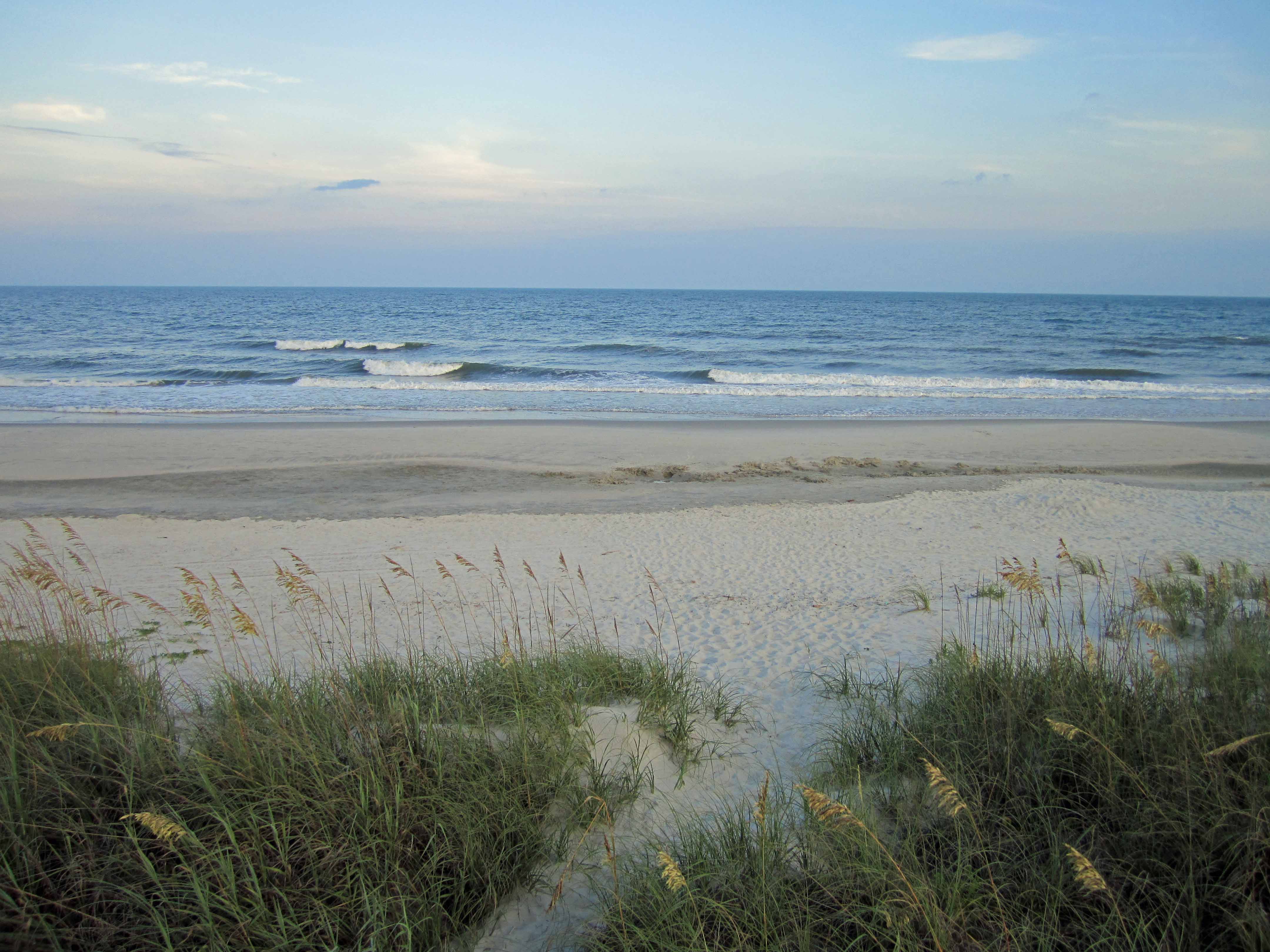
I think about her comment often, and even more during the past week having just returned from the beach. Gazing to the horizon promotes contemplation, yes?

(By the way, I was disappointed to learn that — depending upon a few mathematical variables — the horizon is generally three miles or so away. I prefer the infinite. Of course, when I run three miles, three miles feels infinite. It’s all relative. I think that’s what Einstein meant.)

Back to motives.

In my intimate relationships — with family, primarily, and especially my wife — I sometimes cut with words that fly so fast into the space between us that I’m not aware of how sharp they are, or where they came from. And when she reacts, I’ll brush away what I said as meaningless, accuse her of being overly sensitive. Or, if something she says or doesn’t say (or does or doesn’t do) hurts my feelings, I’ll retreat to my cave to sulk. In other situations, I might have a flash of anger or irritability that’s caused by…hell if I know. These are just three of at least three miles’ worth of examples.

So yes, what I don’t know about motives could fill an ocean.

Writing fiction is about conflict — “the human heart in conflict with itself” (Faulkner) — and when rendering truthful lies on paper, I’m more adept at working with motives. I can endow a character with a surface desire, beneath which deeper currents flow. I wish it were so easy with me.

A friend of mine (another writer) and I went for a bike ride a few weeks back. We talked about access to emotions. “Well, there’s anger…and that’s it,” he said. “Plenty of retrospection afterward, but that never goes anywhere.” I understood. We laughed, and I tossed  up a rhetorical question: “Maybe it’s a gender thing?”

We rode most of the way back in silence. What was I thinking? Something about motives?

Hell if I know.

Posted in Absurd, Questions, Relationships, Writing | Tagged , , , , , , , | 2 Comments

Between the Covers

This post title may mislead. Apologies or rest assured, whichever suits.

A few comments from friends expressed amazement from my last post that (a) I’ve kept journals for so long; and that (b) the writing must be profound.

With the exception of the very first journal entry, inked in the undergraduate library at UNC-Chapel Hill, I’ve not gone through my journals to read entries. I keep them because I think that one day I might.

Maybe I will. Maybe I won’t. “Maybe:” I like this word.

(An aside: one summer, living in a rental house in a tourist destination with a band of waiters eager for meager tips, the landlord hired a painter to slap down two layers on the interior walls. After a couple weeks of inhaling the sweet-noxious smell of wet paint, we began to ask if the painter would be done “soon.” His answer, always the same: “Yes, maybe no.”* So far as I know, that man is still painting the house.)

Without re-reading my journals, I know what flows between the covers: pledges to write more, exercise more, eat and drink less, take a positive outlook on the day. In other words, entries designed to soothe my restless self (selves). Plus, there’s proof that whatever talent I may possess does not include writing poetry or song lyrics.

Say those entries equal 80-plus percent of the output. What makes up the other 20 percent?

Ideas for essays or short stories or characters, anecdotes, conversations overhead, events that struck me as serendipitous or synchronicity at work. For ease of reference, when I sensed I was moving beyond self-soothing drivel, I would circle a letter beside the entry — “I” for idea, “F” for fiction, “TD” for to do, etc. — thinking I would come back soon to follow the threads.

“Soon” has passed, unless the concept is measured against tectonic plate movement or the date(s) of the Rapture, as predicted by evangelical preachers in Texas.

My point? Those stacks of 25+ years of journals aren’t full of writing with a capital ‘W.’ They’re just full of writing. Should there be a bus barreling toward me today with my name on the grille, will all that writing be worthwhile?

Yes. Maybe no.

So, to my incoming students: write anyway, just in case the answer is “Yes.”

*I later learned the painter’s phrase originated from a movie, the name of which I’ve forgotten. Maybe it’s recorded somewhere in one of my journals. Or not.

Posted in Absurd, Philosophical, Questions, Teaching, Writing | Tagged , , , | Leave a comment

“Writing teaches writing…”

Bonnie Friedman, in her fine book Writing Past Dark: Envy, Fear, Distraction and Other Dilemmas in the Writer’s Life, writes, “Writing teaches writing.” Perhaps she’s not the first to pen this — but how often do we pen something entirely original, anyway? — and that’s fine because it’s something we know, whether we acknowledge it or not.

25-plus years of daybooks

Many writers abhor simple maxims. We wouldn’t argue with, “Bicycling teaches bicycling,” but “Writing teaches writing” deserves careful consideration.  We’re a complicated lot.

(An aside: David Jauss, faculty chair of writing at Vermont College of Fine Arts, told me many moons ago that Confucius proclaimed, “Simplicity is the last thing learned.” Ever one to complicate things, I asked Dave how I could bump it up to the next thing learned.)

In graduate school, I learned how valuable close reading is to improving my work. Doug Glover encouraged me to read novels twice: once for the “aboutness” of the text, next for ‘about how the author produced the text.’ Great advice.

Yet reading and writing are different acts.

I’m working on a long work now. That’s code for I’m writing “the genre that shall not be named lest naming it produces bad juju and halts the process.” Like a hockey goalie, I’m superstitious. Bad juju is serious business.

While writing, I won’t read a “how to write” or an “X-number of steps to better dialogue” book. More bad juju. There’s a time and place for such books. I have colleagues and friends — the two are not mutually exclusive — who’ve written excellent books on craft. But because I’m writing now, I avoid books telling me how to write. Instead, I write: on my work in “the genre that shall not be named lest naming it produces bad juju and halts the process” AND in a daybook.

My current preferred daybooks: Art Alternatives' unlined, spiral-bound, 8.5 x 11 sketch books

In a couple of weeks, I’ll meet nearly 100 new writers. One of the first things I’ll tell them is that writing teaches writing. And then, I give the assignment: “You are to keep a daybook throughout the semester, recording at least four entries a week.” They can put just about anything they wish in their daybooks, including photographs, song lyrics, nasty letters to former friends.

Some will take to it and find it helpful. Others will write and claim not to find it helpful. And some won’t give it an honest effort until the night before self-selected excerpts are due. So it goes. As Notorious B.I.G. wrote, “It’s all good.”

Research abounds supporting that writing — fast, reflective, impulsive, messy, or refined writing — improves our critical thinking skills and much more. I believe this to be true. Yet my main motivation for writing is to learn how to write. Because that’s what I want to be when I grow up: a better writer.

Posted in Practical, Reading, Writing | Tagged , , , , , , , , | Leave a comment

Start flying, and flee your problems

The Highway of Hell

Last Sunday, I drove my two older sons from the “flat lands” up to summer camp in the North Carolina mountains.

Previous summers, I remember appreciating the noticeable difference in temperature between Charlotte and Tuxedo, NC. Last Sunday, summer ripped away that relief

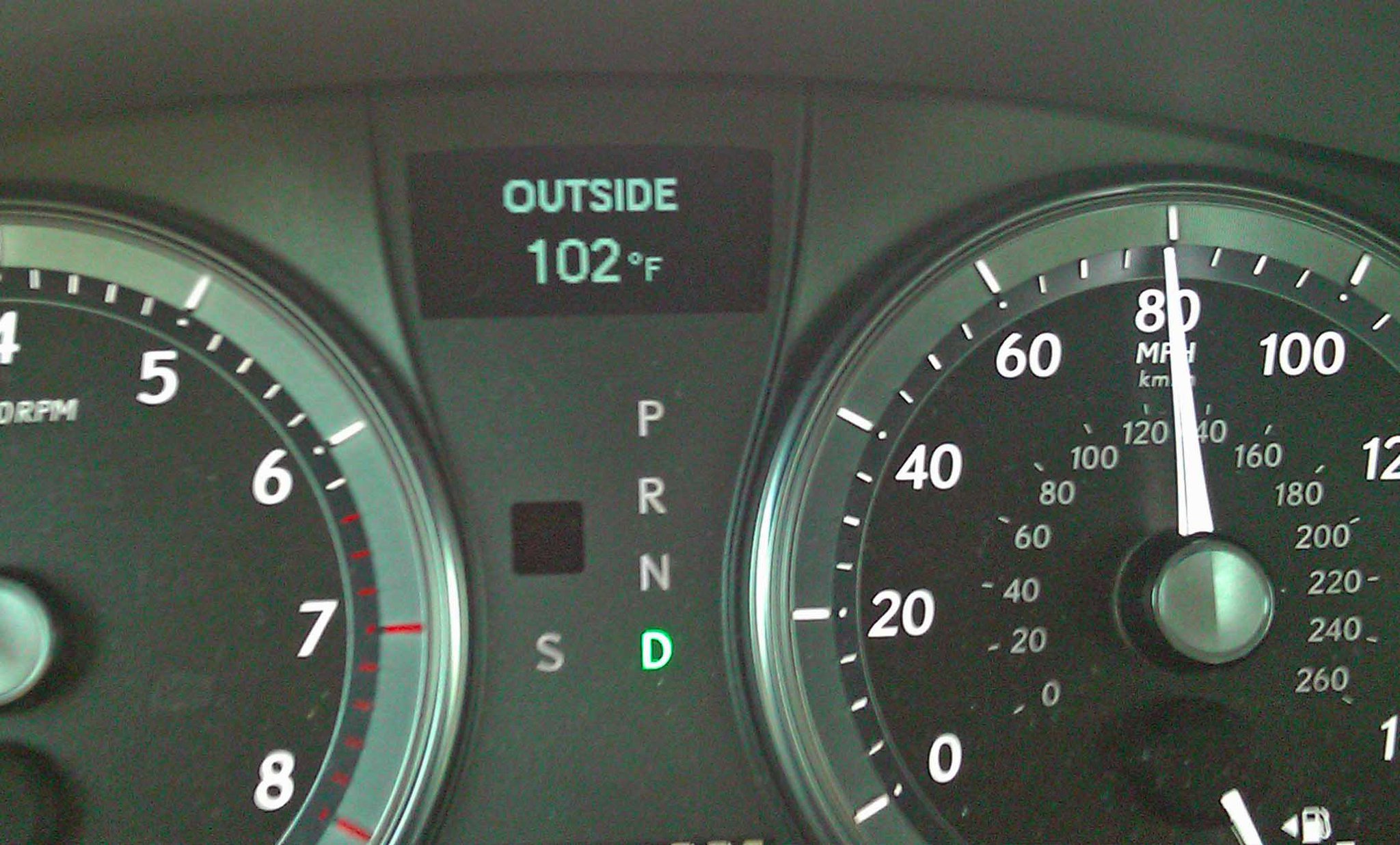
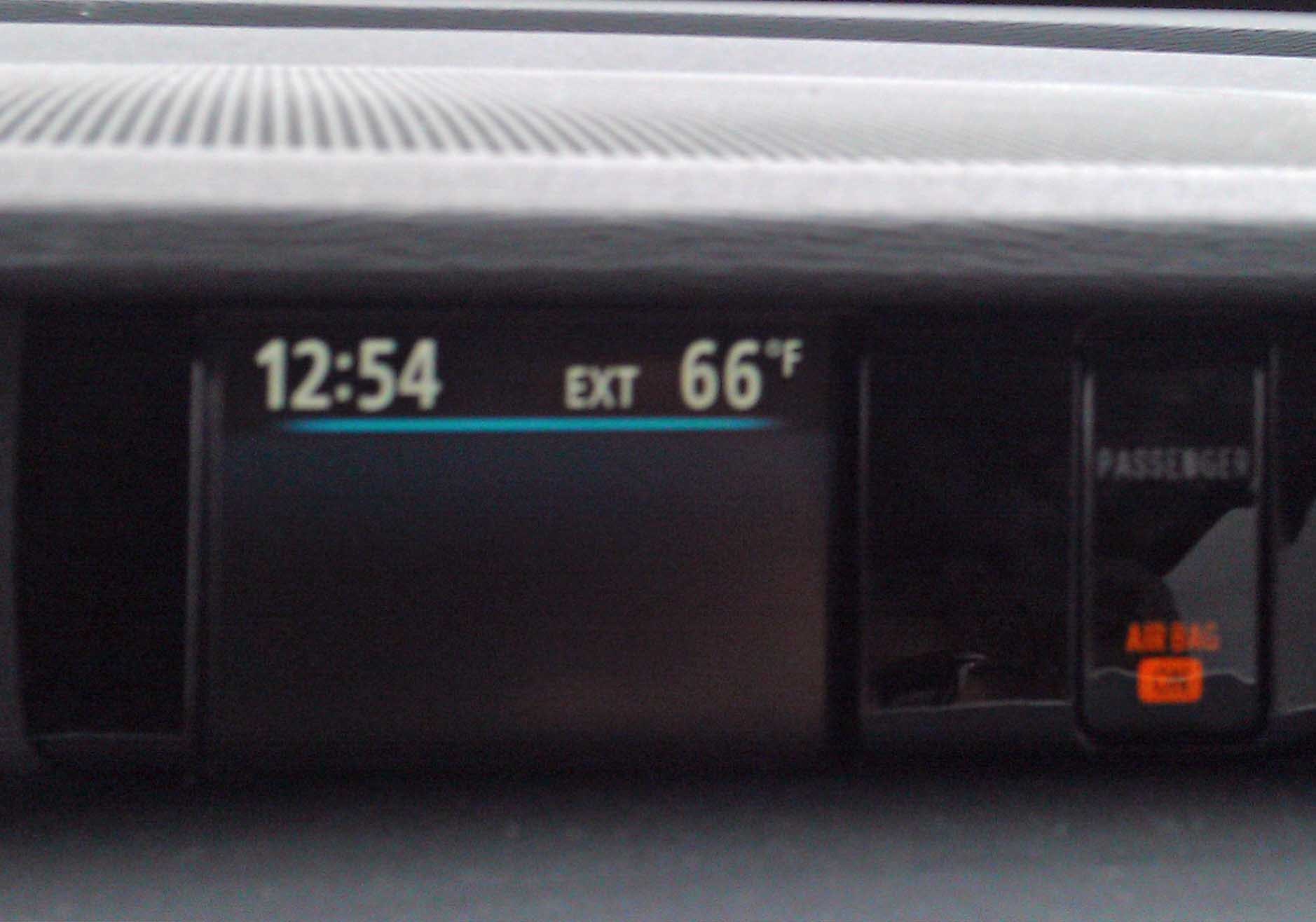
As the car’s thermometer shows, the flat lands were scalding. The 102 was baseline; heat index was 109. A general rule of gaining altitude: temps drop roughly 1o degrees for every 1,000-foot rise in elevation. Not this day. It was in the high 90’s at camp, and getting our sons settled into their cabins soaked my clothes in no time.

Altitude and temperatures descending

The problem: the “heat dome” that settled over much of the country.

The solution? A change in latitude. My wife and I took flight for the arctic climes of Maine.

The lesson: When you can’t stop your thinking, run away and end your problems. It works.

Ahhhh...much better.

Posted in Parenting, Practical, Traveling | 2 Comments

“Stop thinking, and end your problems”

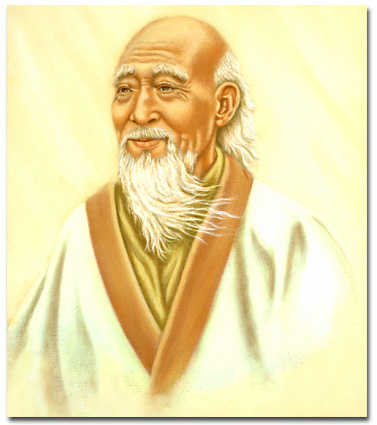
Lao-Tzu, whose Tao te Ching influenced (and continues to influence) my perspective on living, reportedly inked this call to adventure in the 6th Century BCE.

Lao-Tzu (Credit: unable to locate original artist)

Never mind that there are dozens of translations of the Tao (I have my favorites) and that this particular quote from translator Stephen Mitchell may be a simplified interpretation of the author’s original Chinese characters; I’ll just take them as they are above as a springboard.

My problem? What to create as the first post for Calls to Adventure. I performed  numerous fly-by’s with the “About this Blog” section, touching down to draft, edit, add a couple pictures, etc. Meanwhile, my back-brain questioning wrestled with how to begin the blog.

This morning — a Saturday with some down time while our three sons play pick-up soccer in a near-by park and my wife fills camp trunks with clothes and flashlights and gear they’ll need for the next two weeks — I re-discovered this quote.

I stopped thinking and ended the problem; here is my first post.

Calls to Adventure takes its name from scholar-mythologist Joseph Campbell (no relation), who labeled the first step in any journey narrative as a call to adventure. Writing is certainly an adventure. As is traveling, parenting, questioning, going to college, pressing yourself beyond the familiar and into the uncertain terrain of new places, new people, new ideas.

Calls to adventure exist everywhere in our daily lives. My challenge is to pause, listen, and then choose to decide if I’ll answer the call. (We can’t answer them all, of course.) Creating a new blog is answering a call. Composing my first post is answering a call.

How’d I do it? I stopped thinking and began.

Welcome to the blog. Hope you’ll join me along the way.

Malcolm

Posted in Philosophical, Writing | Tagged , , , , | Leave a comment